
History &
Culture
From the Mali Empire's golden age to independence in 1958 — Guinea's story spans ancient empires, colonial resistance, and a vibrant living culture of music, dance, and oral tradition.
Historical Timeline
From ancient empires to modern independence — Guinea's history spans over a thousand years of kingdoms, resistance, and self-determination.
Ghana & Sosso Empires
The territory of modern Guinea fell within the sphere of the Ghana Empire and later the Sosso Empire under Soumangourou Kanté. These kingdoms controlled trans-Saharan gold and salt trade routes that enriched the region for centuries.
Battle of Kirina
Soundiata Kéïta defeated Soumangourou Kanté at the Battle of Kirina, establishing the Mali Empire as the dominant power in West Africa. Much of present-day Guinea became part of this vast empire, spreading Islam and Maninka culture throughout the region.
Songhai Empire & Regional Kingdoms
After the Mali Empire's decline, the Songhai Empire rose and various regional kingdoms emerged in Guinea — including the Fula states of the Fouta Djallon. The 18th century saw a Fula Islamic revolution that established theocratic states in the highlands.
Wassoulou Empire — Samori Touré
Samori Touré built the Wassoulou Empire and led one of the most sustained military resistances to French colonialism in West Africa. His forces fought French expansion for nearly two decades before his capture in 1898, making him a pan-African hero of resistance.
French Guinea
France formally colonized Guinea on 17 December 1891, incorporating it into French West Africa. The colonial period brought forced labor, cash crop extraction, and suppression of local governance — but also the emergence of a Guinean intellectual and political class who would lead independence movements.
Guinea Votes "Non"
In the September 28 referendum, Guinea voted overwhelmingly to reject membership in the French Community — the only French African territory to do so. Led by Ahmed Sékou Touré, Guinea declared full independence on 2 October 1958. France responded by withdrawing all assistance within two months, but Guinea stood firm.
The Sékou Touré Era
Ahmed Sékou Touré ruled Guinea for 26 years, pursuing socialist policies and pan-African ideology. While maintaining independence and African dignity, his regime was also marked by repression and economic mismanagement. His death in 1984 ended the First Republic.
Modern Guinea
Military coups in 1984 and 2008 punctuated Guinea's political history, alongside democratic transitions. Guinea held its first democratic elections in 2010. The country continues to develop its vast mineral wealth — particularly bauxite and the Simandou iron ore deposit — while building democratic institutions.
Cultural Traditions
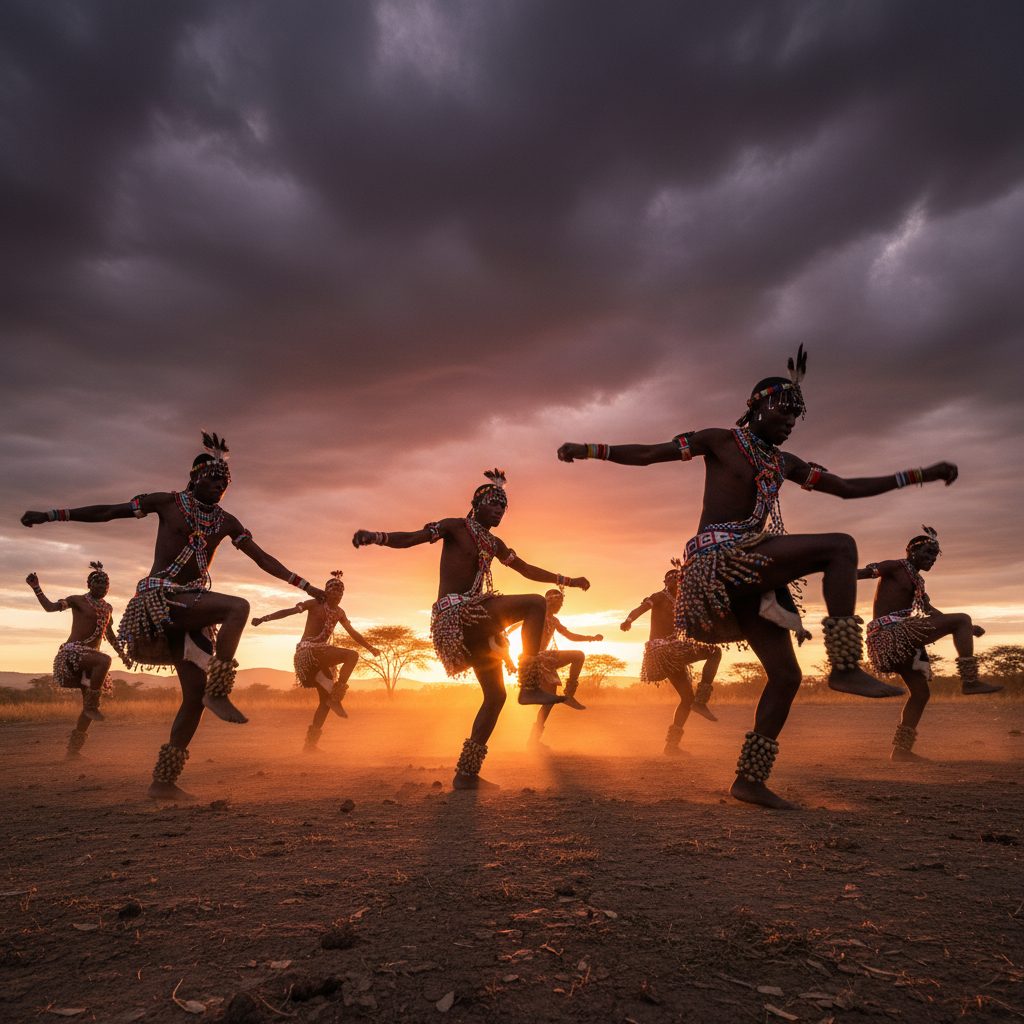
Guinea's cultural wealth is not in museums — it lives in every ceremony, every meal, every drumbeat.
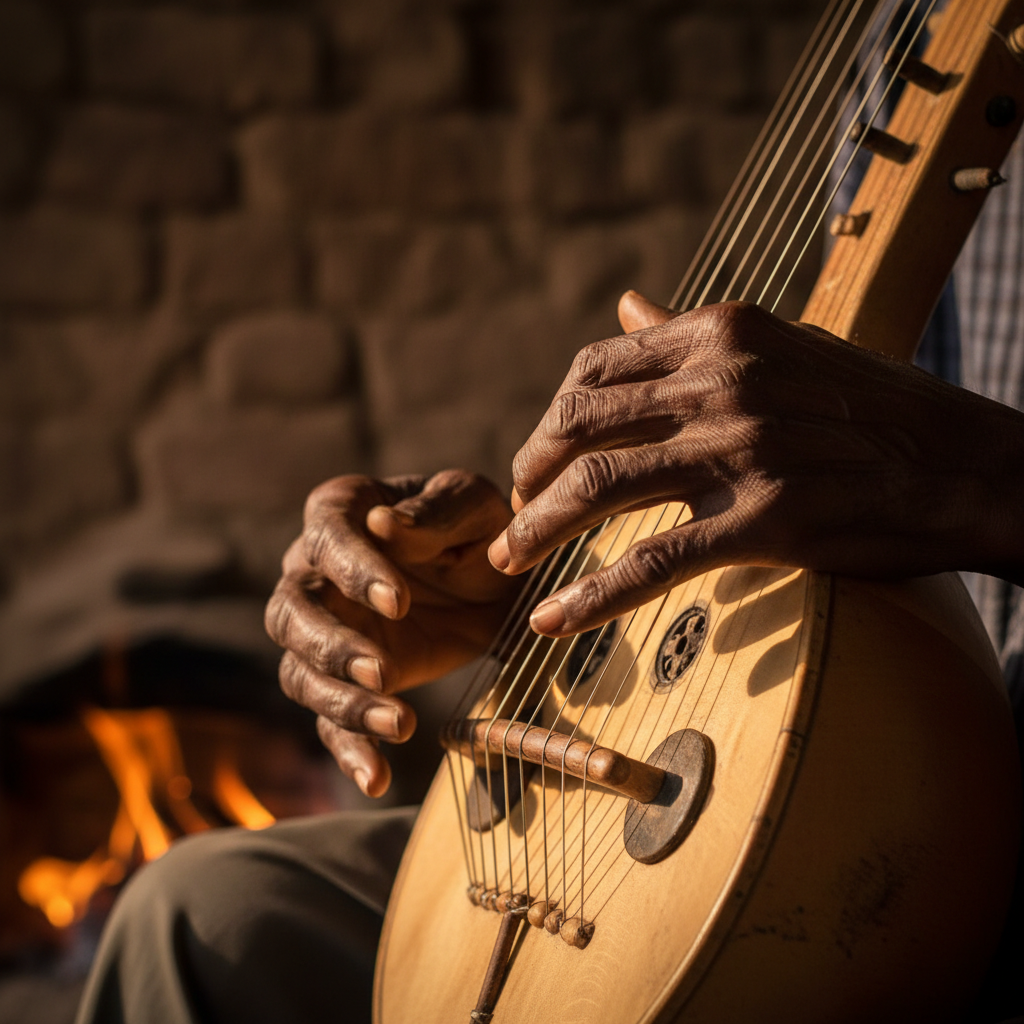
"The griot is the memory of the people — without the griot, the past is silent."
— Mande proverb
Djembe, Kora & the Griot Tradition
Guinea is considered the heartland of West African musical heritage. The djembe drum — now played worldwide — originated in Mande cultures of the Guinea region. The kora, a 21-string lute-bridge harp, is one of the most complex traditional instruments in the world, played by griots (jalis) who serve as living libraries of oral history. The balafon, a wooden xylophone, accompanies ceremonies and celebrations across all four regions. In 1989, Guinean artist Mory Kanté brought this heritage to global audiences with Yeke Yeke, the first African single to sell over a million copies in Europe.
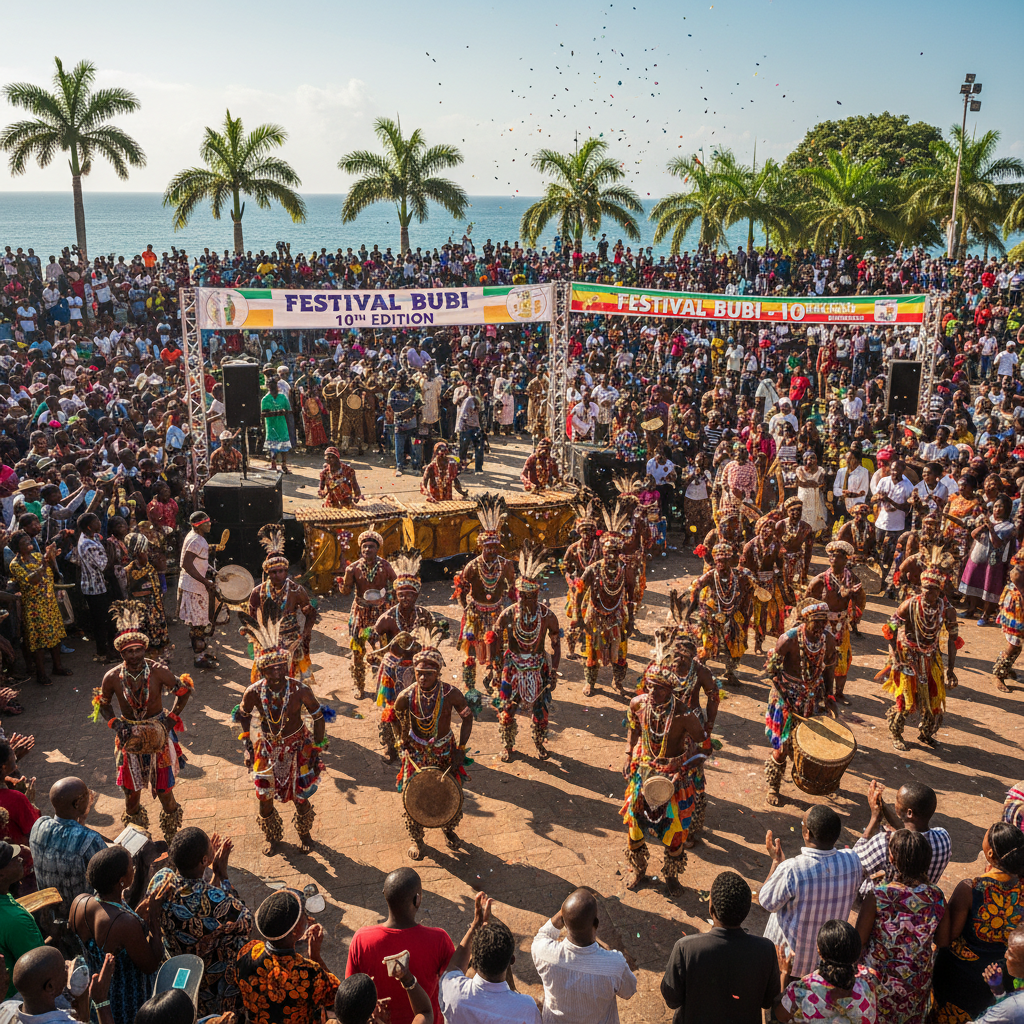
"In Guinea, dance is not entertainment — it is memory made visible."
— Guinean cultural scholar
Ballet Africains — Sacred Movement as Story
The Les Ballets Africains de la République de Guinée, founded in 1958 — the year of independence — is one of the world's oldest and most celebrated traditional African dance companies. Each performance is a living history lesson: harvest dances encode agricultural knowledge, warrior dances preserve battle strategies, and initiation ceremonies mark transitions between life stages. Traditional masks — carved from sacred wood and worn only by initiated men — transform the dancer into an ancestor or spirit force. The company has toured every continent, bringing Guinean cultural heritage to global stages.
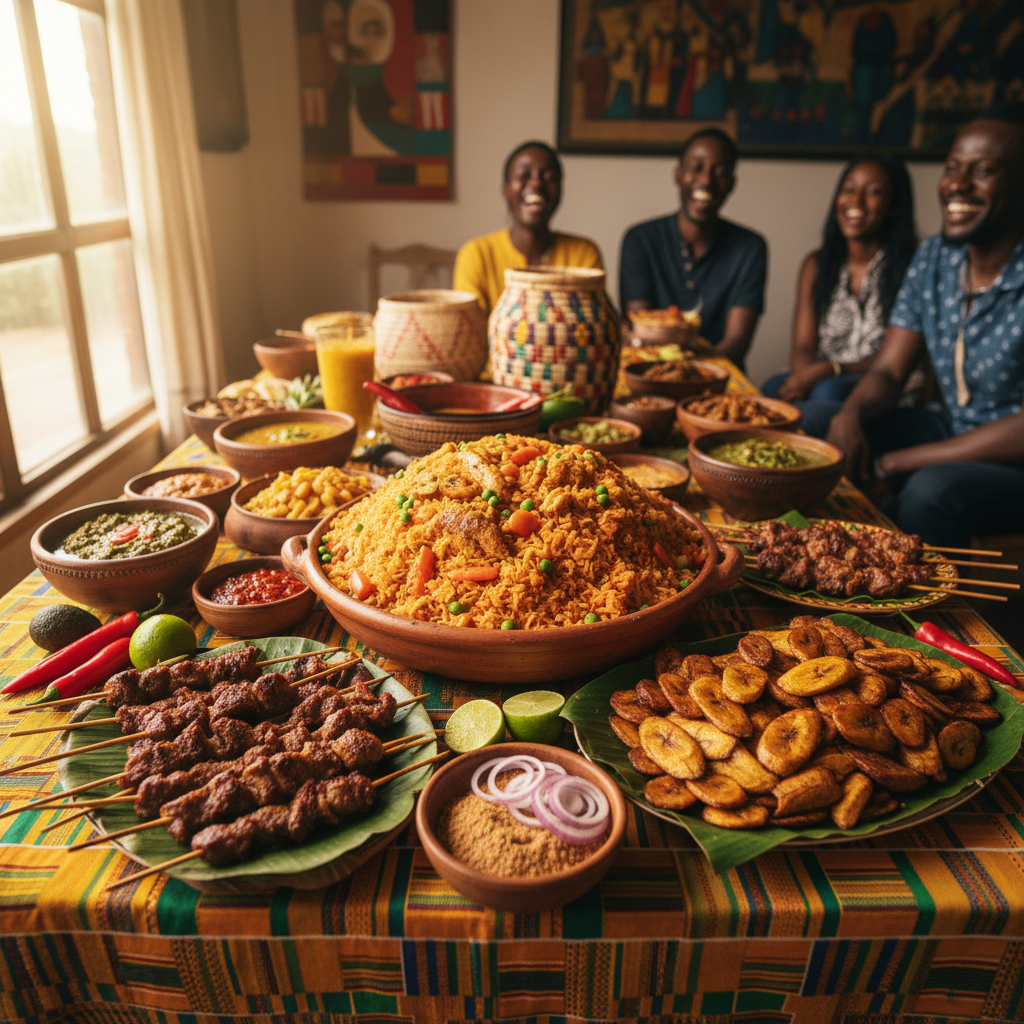
"To eat alone in Guinea is considered a sign of spiritual poverty."
— Guinean cultural tradition
Rice, Community & the Art of Shared Tables
Guinean cuisine is built around rice — served in enormous communal bowls from which everyone eats together. Tigadèguèna (peanut sauce) is the national condiment, a rich, aromatic sauce made from ground peanuts, tomatoes, and spices, poured generously over rice or vegetables. Fouti — steamed rice with sauce — is the everyday staple. The Atlantic coast provides abundant fresh fish, grilled or smoked and incorporated into stews. Forest Guinea contributes palm oil, cassava, and tropical fruits. Coffee from the highlands is among Guinea's finest exports. Meals are rarely eaten alone — sharing food is a foundational social act.
People & Languages
Guinea's 14 million people speak over 24 languages across four major ethnic traditions — a mosaic of identities united under one flag.
Ethnic Composition
Largest ethnic group. Historically pastoral, known for cattle herding and Islamic scholarship. Founded theocratic states in the Fouta Djallon highlands in the 18th century.
Descendants of the Mali Empire. Griots, traders, and farmers. Kankan is their cultural capital — a centre of Islamic learning and Maninka identity.
Coastal traders who historically controlled commerce with European merchants. Dominant in Conakry and the coastal lowlands.
Dozens of distinct ethnic groups in the forest zone, each with unique languages, ceremonies, and traditions. Most ethnically diverse region of Guinea.
Languages of Guinea
Religious Identity
90% of Guineans are Muslim — making Guinea one of West Africa's most consistently Islamic nations. Islam arrived through trans-Saharan trade routes and Sufi brotherhoods over a millennium ago. The remaining 10% practice Christianity or indigenous traditions, particularly in Forest Guinea. Religious practice is deeply woven into daily life, music, and ceremony.